




How to Choose Research Peptides for Sale: A Buying Guide for Lab Equipment
Purchasing research peptides requires navigating a specialized marketplace where quality verification and supplier credentials directly impact experimental outcomes. The Kylo Peptides store and similar vendors serve laboratory professionals who need authenticated compounds backed by third-party testing, proper documentation, and transparent sourcing. Success comes down to five core criteria: certificate of analysis validation, HPLC purity confirmation, mass spectrometry verification, synthesis location transparency, and clear research-use-only designation.
The stakes are straightforward. Substandard peptides waste time, compromise data integrity, and can derail months of research effort. Yet the procurement process feels opaque to first-time buyers who face unfamiliar terminology, varying price points (typically $64.99 to $99.99 for standard sequences), and dozens of suppliers making similar claims. Laboratory managers who’ve learned this the hard way consistently point to the same lesson: vendor selection matters more than initial cost savings.
This guide cuts through the complexity by showing you exactly what separates reputable suppliers from questionable ones. You’ll learn how to decode certificates of analysis, why in-house USA production often signals higher quality control, and which red flags indicate you should walk away regardless of pricing. We’ll compare peptide types available for different research applications, outline the verification steps that protect your investment, and reveal the common mistakes that even experienced researchers make when switching suppliers.
The landscape has matured considerably. Third-party verification services now validate supplier claims through independent testing, online quote systems have streamlined ordering, and one-stop-shop providers bundle synthesis with assay kits and antibodies. Whether you’re establishing a new lab or evaluating current vendor relationships, the framework here gives you practical tools to make confident purchasing decisions.
Understanding Research Peptides and Their Applications
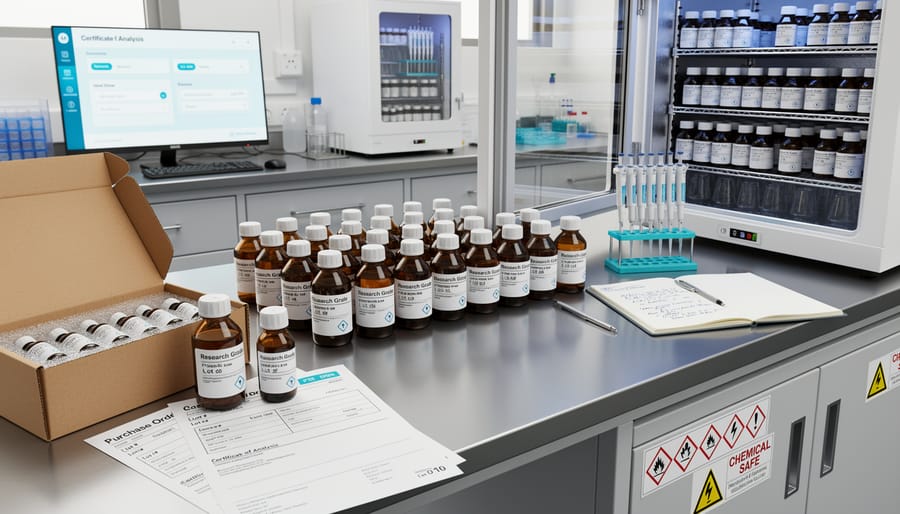
Research peptides are synthetic or naturally derived amino acid sequences manufactured specifically for laboratory investigation and scientific study. These compounds serve as essential tools in various fields of research, including cell biology, immunology, drug development, and molecular biology studies. Scientists use them to explore protein interactions, test biological mechanisms, understand disease pathways, and develop potential therapeutic candidates in controlled laboratory environments.
The key distinction between research peptides and FDA-approved pharmaceutical products lies in their intended use and regulatory status. Research-grade peptides are manufactured for investigational purposes only, they’re designed for experiments conducted on cells, tissues, or in controlled laboratory assays. They haven’t undergone the rigorous clinical trials, safety evaluations, and regulatory approval processes required for human therapeutic use.
This research-only designation isn’t just a legal formality, it reflects fundamental differences in manufacturing oversight, purity requirements, and safety validation. While research peptides may meet high purity standards for laboratory work, they lack the comprehensive testing and quality controls mandated for pharmaceuticals intended for human use.
You’ll typically find research peptides used in academic research institutions, pharmaceutical development laboratories, biotechnology companies, and clinical research facilities. These settings have the proper equipment, trained personnel, and protocols to handle and study these materials safely and effectively. Researchers in these environments use peptides to investigate everything from cellular signaling mechanisms to potential drug targets, always within established laboratory safety guidelines.
Understanding this distinction is crucial when evaluating suppliers, as reputable vendors will clearly label their products for research use and provide thorough documentation for quality verification without making any therapeutic claims.
Key Factors When Evaluating Research Peptide Suppliers
Manufacturing Standards and Location
When evaluating research peptide suppliers, manufacturing location matters more than many researchers initially realize. Where your peptides are produced directly impacts quality consistency, regulatory oversight, and the accountability you can expect throughout the supply chain.
USA-based manufacturing facilities operate under stricter quality control standards compared to many overseas alternatives. Domestic production means peptides are synthesized under regulated conditions with traceable processes from raw materials through final product. This isn’t just about patriotic preference, it’s about verifiable standards. American facilities must adhere to specific manufacturing practices that create documented quality checkpoints at every stage.
In-house production offers distinct advantages over suppliers who outsource synthesis. When a company manufactures peptides on-site rather than contracting to third parties, they maintain direct oversight of the entire process. This control allows for immediate quality adjustments, consistent batch-to-batch results, and faster resolution if issues arise. Some suppliers complete all production in-house within the USA, which gives researchers a single point of accountability rather than a fragmented supply chain where different vendors handle different steps.
Before placing an order, ask potential suppliers where their peptides are manufactured and whether production happens in-house or through contractors. Domestic manufacturing with direct oversight typically correlates with more reliable documentation, better technical support, and products that meet the rigorous standards your research demands.
Third-Party Verification and Testing

When you’re investing in research peptides, independent verification acts as your quality insurance policy. Unlike relying solely on a supplier’s internal testing, third-party validation provides an unbiased assessment of what you’re actually receiving.
The gold standard for peptide verification involves three complementary testing methods. Certificate of Analysis (COA) validation confirms the documented specifications match the actual product. High-Performance Liquid Chromatography (HPLC) purity testing measures the percentage of the target peptide versus impurities or degradation products. Mass spectrometry confirmation verifies the molecular weight and structure, ensuring the peptide’s identity is correct at the molecular level.
Services like ChemVerify have emerged to streamline this verification process. They validate US vendors through third-party COA validation, HPLC purity testing, and mass spectrometry confirmation, offering researchers a way to cross-check supplier claims before committing to a purchase.
Think of third-party testing as the difference between a seller’s description of their product and an independent inspector’s report. For laboratory work where reproducibility and accuracy matter, that independent perspective can save you from costly experimental failures caused by degraded or mislabeled peptides. Always request current COAs and confirm they come from recognized third-party laboratories rather than in-house testing alone.
Pricing and Value Considerations
Research peptide pricing varies considerably, and understanding what drives those differences helps you evaluate whether you’re getting genuine value or just paying more. When you see prices ranging from $64.99 to $99.99 for seemingly similar products, the variation often reflects factors beyond the peptide sequence itself.
Purity grade significantly impacts cost. Higher purity peptides require more rigorous synthesis and purification processes, which translates to higher prices. Manufacturing location matters too, USA-based production typically costs more than overseas alternatives, but domestic facilities often maintain stricter quality controls throughout the process. You’re not just paying for the compound; you’re paying for the oversight and standards that come with it.
Third-party verification adds cost but provides essential quality assurance. Suppliers who invest in independent COA validation, HPLC purity testing, and mass spectrometry confirmation build those expenses into their pricing. Custom synthesis capabilities, technical support availability, and comprehensive documentation systems also contribute to the final price.
The cheapest option rarely represents the best value for laboratory work. Instead of focusing solely on the lowest price per vial, consider the total cost of quality issues, failed experiments, or time spent dealing with unresponsive vendors. A slightly higher upfront cost often saves money when it comes with verified purity, reliable documentation, and knowledgeable support when you need it.
Types of Research Peptides and Supply Options Compared
When you’re shopping for research materials, understanding your product options helps you match laboratory requirements with supply capabilities. Research peptides come in several distinct formats, each designed for different experimental needs and procurement timelines.
Standard catalog peptides represent the most straightforward option. These are pre-manufactured sequences that suppliers keep in inventory, ready to ship immediately or within a few days. They’re ideal for common research applications where you’re working with well-established peptide sequences. Catalog options typically offer the fastest turnaround and most competitive pricing since they’re produced at scale. You’ll find these ranging from around $64.99 to $99.99 for standard research quantities, though prices vary based on sequence complexity and purity requirements.
Custom peptide synthesis services address scenarios where your research demands specific sequences not available in standard catalogs. Some suppliers manufacture these products in-house in the USA, maintaining quality control throughout the process. Custom work makes sense when you’re exploring novel sequences, need specific modifications, or require peptides for proprietary research where intellectual property matters. The trade-off is longer production times and higher costs compared to catalog products.
| Type | Best For | Typical Lead Time | Customization Level |
|---|---|---|---|
| Standard Catalog Peptides | Common sequences, quick procurement | 1-5 business days | None |
| Custom Synthesis | Novel sequences, specialized research | 2-6 weeks | Fully customizable |
| Assay Kits | Complete experimental setups | 1-7 business days | Pre-configured |
| Antibodies | Detection and analysis work | 3-10 business days | Limited options |
Pre-made assay kits bundle peptides with the reagents and protocols needed for specific experimental procedures. These packages streamline research when you’re conducting standardized tests or validation work. Rather than sourcing individual components separately, you get everything needed for a particular assay in one order. Some vendors have built complete one-stop-shop services that let you order peptides, assay kits, and related materials through a single platform with instant quote and ordering processes.
Antibodies complement peptide research, particularly for detection and quantification work. While technically distinct from peptides, they’re often purchased alongside them for experiments requiring both synthesis and analysis capabilities. Having access to both through a single supplier simplifies procurement and can reduce shipping costs.
Purity grades matter across all these categories. Research-use-only materials span various purity levels, with higher grades commanding premium prices. Your experimental requirements dictate which grade you need. Understanding lead time expectations for each product type helps you plan research timelines and avoid delays when switching between catalog and custom options mid-project.
Evaluating Vendor Capabilities and Services
When evaluating research peptide suppliers, the product catalog represents only part of your procurement decision. The vendor’s service infrastructure and support systems can significantly impact your research timeline, budget predictability, and overall laboratory efficiency.
Start by assessing the ordering and quoting process. Modern peptide suppliers should offer streamlined online systems that let you request pricing and place orders without multiple email exchanges or phone calls. Some vendors provide instant quote and order processes that give you real-time pricing information, which helps when you’re working within tight grant budgets or need to make quick procurement decisions. This efficiency matters particularly when you’re coordinating multiple supply orders or working under time constraints.
Custom synthesis capabilities deserve careful examination if your research extends beyond standard catalog peptides. Not all suppliers maintain in-house synthesis facilities, some outsource custom work, which adds time and reduces quality oversight. Vendors with USA-based in-house production can typically offer faster turnaround, better communication about custom projects, and more direct accountability for quality issues. Ask about modification capabilities, sequence length limits, and typical synthesis timelines before committing to a custom order.
Consider whether the supplier can serve multiple research needs from a single source. A one-stop-shop approach that provides peptides, antibodies, assay kits, and related materials simplifies purchasing workflows, reduces shipping costs, and consolidates vendor relationships. This convenience becomes especially valuable for laboratories managing multiple concurrent projects.
Before selecting a vendor, verify these essential service elements:
– Online ordering system with transparent pricing and product specifications
– Custom peptide synthesis performed in-house rather than outsourced
– Technical support staff who understand research applications and can advise on product selection
– Clear documentation standards including COAs with every shipment
– Defined turnaround times for both catalog and custom orders
– Flexible shipping options that accommodate your laboratory’s receiving schedule
Technical support quality separates adequate suppliers from exceptional ones. Your vendor’s team should understand peptide chemistry well enough to answer questions about solubility, storage requirements, handling protocols, and potential modifications. This expertise becomes crucial when you encounter unexpected results or need to troubleshoot an application. Responsive support that provides answers within hours rather than days keeps your research moving forward.
Documentation standards reveal a supplier’s commitment to quality. Every peptide shipment should include a Certificate of Analysis showing purity verification through HPLC testing and mass spectrometry confirmation. Suppliers who provide this documentation automatically demonstrate better quality control than those who require you to request it separately. Third-party verification services can help you validate these COAs and ensure the testing actually confirms what the supplier claims.
Top Recommendations for Different Research Needs
Selecting the right research peptide supplier depends on your laboratory’s specific priorities and workflow requirements. Different facilities have different needs, and understanding which supplier capabilities matter most for your research will help you make a more informed decision.
If domestic manufacturing is your top priority, look for suppliers with USA-based in-house production facilities. Some vendors manufacture all their peptides domestically, which typically means better oversight of the entire production process and more consistent quality control. In-house production also tends to result in faster turnaround times and easier communication if questions arise about a specific batch. Researchers who need to verify the manufacturing location and standards will find this transparency valuable, especially when working with institutional procurement requirements that favor domestic suppliers.
For laboratories requiring custom peptide synthesis, focus on vendors that offer both catalog products and custom manufacturing capabilities. The ability to order standard sequences one day and commission a custom synthesis the next streamlines your procurement process considerably. Some suppliers position themselves as comprehensive providers, offering peptides, antibodies, and assay kits from the same source. This one-stop-shop approach can simplify ordering, reduce shipping costs, and give you a single point of contact for technical questions across multiple product types.
If your facility places heavy emphasis on documentation and verification, prioritize suppliers who provide robust third-party testing validation. Look for vendors whose products are verified through independent COA validation, HPLC purity testing, and mass spectrometry confirmation. Third-party verification systems add an extra layer of quality assurance beyond the manufacturer’s own testing. Laboratories conducting research that requires meticulous documentation trails should confirm that suppliers provide detailed Certificates of Analysis with every order, not just upon request.
Budget-conscious facilities face a balancing act. Research peptide prices can vary significantly, you’ll see catalog listings ranging from around $65 to $100 for similar products depending on the supplier and specific peptide. While price matters, the lowest-cost option isn’t always the best value if it lacks proper documentation or testing verification. Instead, compare the total package: what testing comes standard, whether shipping is included, and how quickly you can get technical support if needed. Some vendors offer online instant quote systems that let you compare pricing across multiple peptides quickly, which helps when planning larger orders or comparing suppliers.
Consider starting with a small test order from any new supplier to evaluate their ordering process, shipping speed, product quality, and documentation before committing to larger purchases.
Common Mistakes to Avoid When Purchasing Research Peptides
Laboratories and researchers often rush into peptide purchases without thoroughly vetting their suppliers, leading to compromised results and wasted resources. One of the most significant errors is failing to request and verify third-party testing documentation before placing an order. Many facilities assume that all vendors provide reliable products, but without independent verification through services like HPLC purity testing and mass spectrometry confirmation, you’re essentially taking the supplier’s word on quality. Some researchers have learned this lesson the hard way after discovering their peptides didn’t match the advertised specifications.
Another common pitfall is making purchasing decisions based solely on price comparisons. While budget constraints are real, choosing the cheapest option without examining the Certificate of Analysis documentation or understanding what’s included in that price often backfires. A $64.99 peptide without proper testing isn’t a bargain if it compromises your research integrity. The lowest-priced supplier may cut corners on manufacturing standards or skip verification steps that ensure product authenticity.
Researchers also frequently misunderstand the “research use only” designation, treating it as merely a legal formality rather than a meaningful distinction. These products aren’t FDA-approved and are manufactured specifically for laboratory applications, not for any other purpose. Ignoring this designation can create serious compliance issues for your facility.
Many laboratories overlook custom synthesis capabilities when selecting a vendor, only to discover later that they can’t get specialized sequences when needed. If your research might require custom peptides, verify those services upfront rather than scrambling to find a new supplier mid-project.
Finally, researchers often neglect to clarify storage requirements before purchase, leading to degraded peptides and unusable materials. Ask about proper storage conditions, shelf life, and handling protocols during your initial supplier conversations, not after delivery.
Practical Tips for Your First Research Peptide Purchase
Start by asking the right questions before placing your order. Contact the supplier’s technical support team and request detailed product specifications, including molecular weight, storage conditions, and recommended reconstitution protocols. This initial conversation reveals how responsive and knowledgeable they are, qualities you’ll appreciate when troubleshooting later.
Always request the Certificate of Analysis before you buy, not after. A legitimate supplier will provide this documentation readily, and you should review it carefully. Check that the HPLC purity testing results match the advertised purity percentage, verify the mass spectrometry data confirms the correct molecular weight, and ensure the testing was performed recently. If the supplier hesitates or can’t produce a current COA, that’s your signal to look elsewhere.
Get quotes from at least three different vendors to understand the market. While prices for common research peptides typically range from around $65 to $100, you’ll notice variations based on purity grades, quantities, and included services. Compare what’s actually included in each quote, some suppliers bundle shipping and verification documentation, while others charge separately.
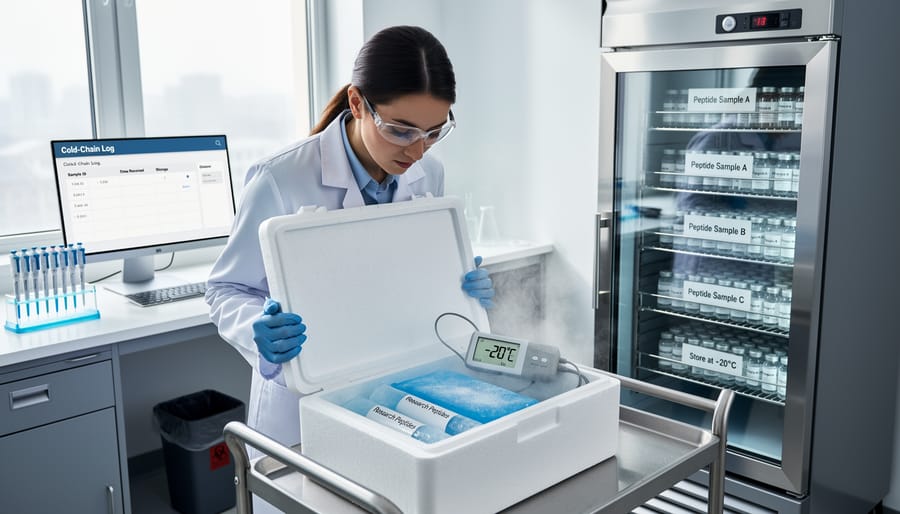
Before your peptides arrive, prepare your storage setup. Most research peptides require freezer storage at specific temperatures, and you’ll need proper handling protocols in place. Read the technical documentation thoroughly so you’re ready when the package arrives.
Build a working relationship with your supplier’s support team from day one. Save their contact information, note which representative helped you, and don’t hesitate to ask questions about handling or storage. The suppliers who invest in strong technical support often provide the most reliable products, and establishing this connection makes repeat ordering smoother.
Keep detailed records of your purchase, including the COA, lot numbers, and storage dates, documentation that proves invaluable for research reproducibility.
Frequently Asked Questions
Are research peptides FDA-approved for human use?
No, research peptides are not FDA-approved and are manufactured exclusively for laboratory research purposes. They’re sold with clear “research use only” labeling to indicate they’re intended for scientific study, not human consumption or therapeutic application.
How can I verify that research peptides are authentic?
Request a Certificate of Analysis (COA) from your supplier and verify it through third-party validation services like ChemVerify, which confirms authenticity through HPLC purity testing and mass spectrometry confirmation. Legitimate suppliers provide detailed testing documentation without hesitation.
What’s the typical price range for research peptides?
Research peptide pricing varies widely based on purity, quantity, and complexity, with common products ranging from around $64.99 to $99.99 for standard catalog items. Custom synthesis and specialized peptides generally cost more depending on sequence complexity and order volume.
How long does custom peptide synthesis typically take?
Custom synthesis timelines depend on the peptide’s complexity, length, and the supplier’s current workload, but most vendors can provide estimated delivery dates when you request a quote. Using documentation from your supplier’s online ordering system helps track progress and manage laboratory timelines effectively.
Beyond these common questions, researchers often ask about proper storage practices for maintaining peptide stability. Most research peptides require storage at -20°C or colder, with some requiring -80°C conditions depending on their chemical properties. Your supplier’s technical support team can provide specific storage recommendations for each peptide you purchase, and maintaining proper storage conditions is critical for preserving research integrity. Keep peptides in sealed containers with desiccants to prevent moisture exposure, and always follow the handling protocols outlined in your product documentation to ensure reliable experimental results.
Purchasing research peptides requires the same careful evaluation you’d apply to any critical laboratory supply. Throughout this guide, we’ve covered the essential factors that separate reliable suppliers from questionable ones: manufacturing standards and location, independent third-party verification, comprehensive testing documentation, and transparent pricing structures. These aren’t optional considerations, they’re fundamental to ensuring your research materials meet the quality standards your work demands.
Price matters, but it shouldn’t be your primary decision-making factor. A supplier offering peptides at significantly lower costs might be cutting corners on testing, using overseas manufacturers with unclear quality controls, or providing inadequate documentation. The few dollars you save upfront can cost you far more in compromised results, wasted time, and repeated experiments.
Before placing your order, verify that your chosen supplier provides Certificate of Analysis documentation, uses HPLC purity testing and mass spectrometry confirmation, and offers responsive technical support. Request samples of their documentation, ask questions about their manufacturing process, and don’t hesitate to comparison shop across multiple vendors.
Your research deserves materials you can trust. Taking the time to thoroughly evaluate suppliers now sets the foundation for reliable results throughout your projects.