July 08, 2011
By: Admin
Category: Solar Architecture
Solar Pavement by Onyx and Butech
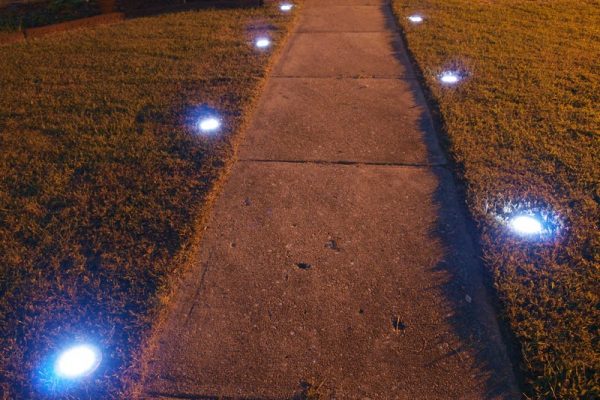
Onyx Solar collaborating with Butech – subsidiaries of ceramics, kitchen and bathroom interior manufacturer, Porcelanosa – making photovoltaic paving stones specially made for outdoor applications, such as yard or sidewalk.
To be able to absorb sunlight, both companies make the solar pavement from glass and ceramics. Solar cells embedded between the two materials. At the top of the layer is glass, while at the bottom that serves as buffer made ??of ceramic.
Read the rest of this entry »
Incoming search terms for the article:
butech porcelanosa onyx solar (1),
Powered by Article Dashboard activities newton\s laws of physics (1),
solar pavement (1)
No Comments →
November 27, 2009
By: Admin
Category: General
New Solar Technology

Solar technologies is now highly developed, with some progress is being developed to be used every day.
Below 10 Solar Technologies to note:
- Water Heating Solar Panel: Pyron Solar Triad uses a special design, short focal-length, lens in the acrylic concentration to reflect and accept the light, effectively concentrate 6.500 solar power in the form of a small light. The second lens capture light and focus on PV cells. According to related companies, HE Optics System produces 800 times more energy than the silicon solar cells.
- Home Solar to Hydrogen Storage: An MIT professor Daniel Nocera, build a company this year to market a technology that can split water and store solar energy. The key of this company is to achieve a breakthrough solar energy to make solar power cheaper.
“The idea is to use solar panels to power the electrolyzer to produce hydrogen which would be stored in tanks. When people need electricity, the stored hydrogen would put through a fuel cell.”
- Solar panel roof that can be printed and painted: If solar power is easy to install as to paint your roof with sunlight resistant paint, it will lower the standard for the installation of solar power at home. This technology called silicon ink, and according to the U.S. National Renewable Energy Laboratory, solar cells showed 18% energy savings.

- Large Panel Solar Film: SunFab ™ system uses silicon thin film technology to market the largest and most powerful panels in the world and combines inexpensive material.

- Organic Solar Concentrators: Engineers at MIT have created a method to transform glass into a high-tech solar concentrator, using color glass to collect and emit light which is usually missing from the panel surface. This technology can create a building for use with glass window film to gather strength. Other companies, GreenSun, has developed a panel of light color where it catch the other parts of the spectrum of the sun, and does not require direct sunlight to work.
- Space Based Solar: Japanese are developing a giant space station with solar power generators to transmit solar power to earth from 36.000 km above the earth within the next 30 years. The Japanese Government supports $ 21 billion project, which includes a space station solar power with solar panels cubical 4km, save electric energy of 1 gigawatt, enough for 300,000 homes in Tokyo.
- Solar Roads: Solar Roadways concept, will make a way to use glass panels to collect and distribute solar energy to illuminate the light at night and hot in winter, with enough remaining energy to light homes and businesses. Discoverer, Scott Brusaw, estimating each mile of solar panels can be illuminated 500 houses, and is expected to make a panel for 12×12 need cost about $ 5,000.

- SunCatcher: Stirling Energy System, contains a solar concentrator in the bowl structure supported by a convex mirror, can be used in Arizona soon. SunCatcher using glass system fitted with a parabolic bowl for concentrating solar power in high-efficiency Stirling engine, with each bowl produces 25.000 watts.

- Solar Nanotechnology: Research workers at McMaster University in Ontario has developed a light-absorbing nanowires formed of excellent photovoltaic materials in thin but durable carbon-nanotube fabric. They also use small particles in a flexible polyster film where can lead to solar cells that are both flexible and cheaper than today’s solar cells.
- Grid Ready for Solar: Andalay AC solar energy panels, made with Akeena Solar technology, integrate the racking, wiring and electrical grounding components to the panel. According to the company, this will against the damage, a lot of money in saving for 30 year lifetime. Andalay AC solar energy panels produce a safe AC power, and can be a safe installation process for users.
Incoming search terms for the article:
solar paint technology (3),
installation of building solar films (2),
solar paint (2),
solar film (2),
Powered by Article Dashboard mexican culture institute miami (2),
thin film solar cells paint (1),
solar film home windows (1),
silicon ink (1),
Powered by Article Dashboard mexican color schemes (1),
Powered by Article Dashboard interior paint colors (1),
Powered by Article Dashboard insulated pins international travel plugs (1),
Powered by Article Dashboard installation (1),
Powered by Article Dashboard annual income mechanical engineering technology (1),
windfandr (1)
No Comments →
November 24, 2009
By: Admin
Category: Solar Cells
What Does Solar Cell Mean?
You may have seen a calculator that has a solar cell? calculator that does not need batteries, and in some cases do not even have the off button. As long as you have enough light, so the calculator can be on at any time and forever. You may have seen larger solar panels, such as in housing or traffic lights, haven’t you? In this article I will review how solar cell work so it can deliver the energy and drive an electronic device.
Today the demand for electricity has become a major requirement in all corners. The presence of power plants sometimes do not solve the need for electricity especially in remote areas where the terrain is always an excuse. Here an alternative energy that can be easily found in nature and can be used as an alternative free energy replacing conventional electricity, because it can turn on household electronics such as televisions, radios and lights.

Solar cells made from pieces of a very small silicon coated with special chemicals to form the basis of solar cells. Solar cells generally have a minimum thickness of 0.3 mm is made from semiconductor materials incision with positive and negative poles. Each solar cell produces usually voltage 0.5 volts. Solar cells is an active element (semiconductor) that utilizes photovoltaic effect to transform solar energy into electrical energy.

Solar cells contain a connection (junction) between two thin layers made of semiconductor materials, each of which is known as a semiconductor type “P” (positive) and semiconductor type “N” (negative).
N-type semiconductor made of silicon crystals and there are also some other materials (typically phosphorus) within the limits that these materials can provide an excess of free electrons.
Electrons are sub atomic particles are negatively charged, so that the silicon alloy in this case known as N-type semiconductor (Negative). P-type semiconductor made of silicon crystal in which there is a small amount of other material (typically boron) which caused the shortage of material free electrons. Lack or loss of electrons is called a hole. Because there is no or lack of electrons electrically negative charged then the silicon alloys in this case as a semiconductor type-P (Positive).
Composition of a solar cell, the same as a diode, consisting of two layers, called PN junction. PN junction obtained by staining a pure semiconductor silicon (valence 4) with the impurity valence 3 on the left side, and one on the right impurity stained with valence 5.


The effect of the electric field in a PV cell


Operation of a PV cell

Basic structure of a generic silicon PV cell
Thus formed on the left side that is not pure silicon again and called P type silicon, while the right side is called silicon type N. In the pure silicon there are two kinds of electrical charge carriers are balanced. Positive electric charge carriers called holes, while the negative are called electrons. After a desecration process, in the P type silicon formed holes (positive charge carriers) in a very large number compared with the electron. Therefore, in the P type silicon holes are majority charge carriers, while the electrons are minority carriers. Conversely, in the N type silicon is formed of electrons in a very large number so-called majority carriers, and holes called minority carriers.
In the silicon rod there was interaction between the P and the N. Therefore called the PN junction. When present, the P associated with the positive pole of a battery, while the negative polar associated with the N, then there is a relationship called “forward bias”.
Under forward bias, electrical currents arise in a series due to both types of charge carriers. So the electric current flowing in the PN junction is caused by the movement of electron and the movement of holes. An electric current is flowing in the direction of holes movement, but opposite direction with the movement of electrons. Just to further explain, electrons moving in the conductor material can lead to electrical energy. And electrical energy is called as an electric current that flows in the opposite direction to the movement of electrons.
But, if the P associated with negative pole of batteries and the N associated with positive pole, then now formed a relationship called “reverse bias”. In these circumstances, the hole (positive charge carriers) can be connected directly to the positive pole, while the electrons are also directly to the positive pole. So, clearly in the PN junction there is no movement of majority charge carriers either the holes or electrons. Meanwhile, the minority charge carriers (electrons) in the part P moves trying to reach the positive pole of the batteries. Similarly, the minority charge carriers (holes) in the N also moved to reach the negative pole. Therefore, in a state of reverse bias, in the PN junction there is also output current even in very small amounts (micro amperes). This current is often called the reverse saturation current or leakage current.
.
Anything interesting in reverse bias. When the temperature of PN junction raised they will be able to enlarge leakage current. Means that if given the energy (heat), the minority charge carriers in the PN junction grows. Because the light is one form of energy, so if there is light that hit a PN junction may also produce enough energy to generate charge carriers. This symptoms are called photoconductive. Based on the photoconductive symptoms made of photodiode electronic components from PN junction.
In reverse bias, with increasing intensity of light that hit photodiode can increase the level of leakage current. Leakage currents can also be enlarged by increasing the battery voltage (reverse voltage), but the addition of leakage currents were not significant. When the batteries in the reverse bias circuit is removed and replaced with a load of resistance, the provision of light that can cause charge carriers both holes and electrons. If the illumination light is increased, current output was greater. Such symptoms are called photovoltaic. Light can provide enough energy to enlarge the number of holes in the P and the number of electrons on the N. Based on the symptoms of this photovoltaic electronic components can be created photovoltaic cell. Because usually the sun as a source of light, the photovoltaic cell is also called the solar cell (solar cells) or a solar energy converter.
So the solar cell is essentially a large photo diode and designed by referring to the photovoltaic symptoms so that could produce the greatest possible power. P type silicon is the very thin surface layer so that light can penetrate directly reach the junction. Part P is given ring-shaped nickel layer, as a positive output terminal. Under the P is the N type that is coated with nickel as well as the negative output terminal.
To obtain a large enough power required much of solar cells. Usually, solar cells arranged form the shape of the panel, and is called the photovoltaic panels (PV). PV as a source of electric power was first used in satellites. Then PV as an energy source for cars, so there are solar electric car. Now, in foreign countries, PV has started to be used as a roof or wall of the house. Sanyo has made even a semi-transparent PV that can be used as a substitute for glass.
After getting the output of the solar cell is a direct electrical current can be used to load utilized. But also the electric current can be used as a charge stored by the battery to be used when needed, especially at night because there was no sun.
If the solar cell is used for storage into the battery, then the resulting voltage magnitude must be above the battery specification. For example the battery used is 12 volts, the voltage produced by solar cell must be above 12 volts in order to perform charging.
We recommend that before carrying out the charging battery should be empty because the incoming flow will be filled with the maximum. The unit capacity of a battery is the Ampere-hour (Ah) and these characteristics are usually found on the label of a battery. For example a battery with 10 Ah capacity will fill up for 10 hours with the solar cell output currents of 1 Ampere.

Incoming search terms for the article:
solar panel diagram (85),
solar cell diagram (66),
solar panels diagram (24),
diagram of solar cell (21),
solar energy diagram (20),
semiconductor diagram (19),
solar cells diagram (18),
Solar Cell (16),
solar cells for sale (12),
diagram of solar panel (6),
solar panels (4),
labelled diagram of a solar cell (3),
solar energy diagrams (2),
solar cells connection (2),
labelled diagram of solar panel (2),
labelled diagram of a solar panel (2),
solar panel diagram of layers (1),
type of semiconductor in solar (1),
solar array diagram (1),
simple solar panel drawing (1)
Comments (35)