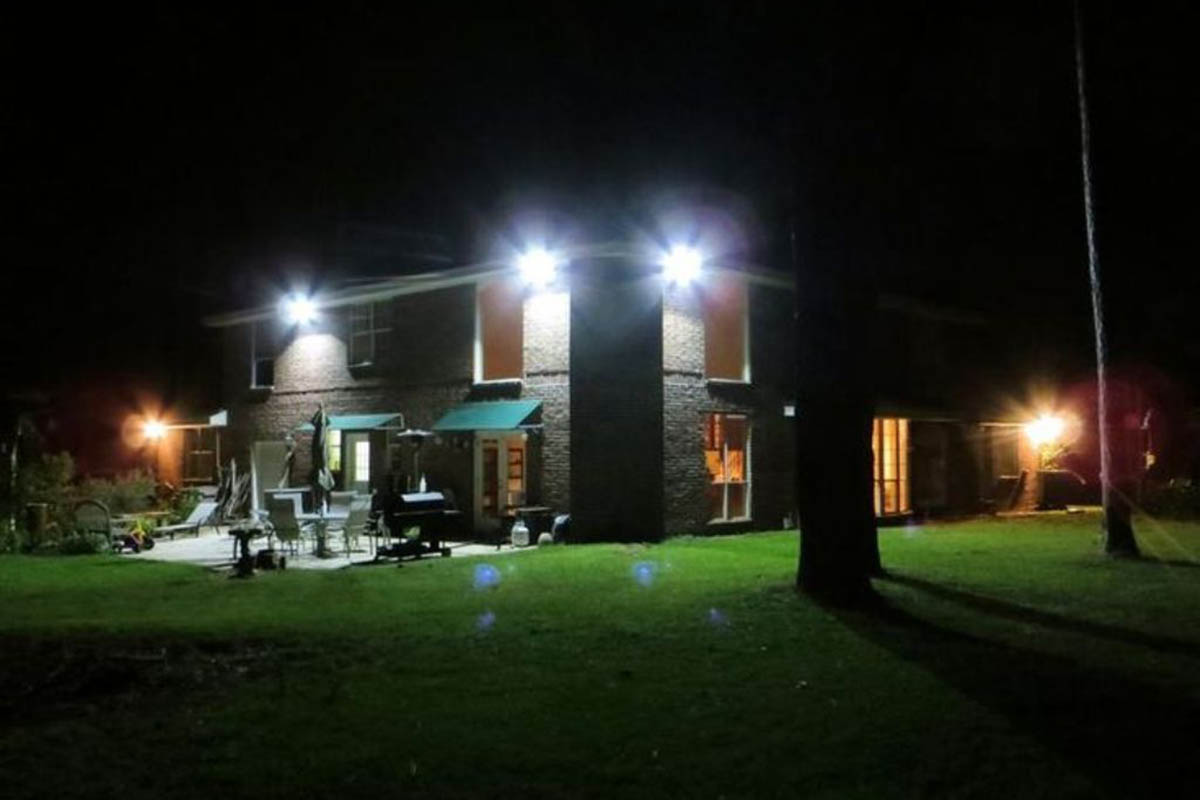
Solar Power Project
Limoneira Solar Project
Limoneira Company has installed Limoneira Solar in Santa Paula.
Detailed description from Limoneira after the pictures…
Limoneira Company has installed Limoneira Solar in Santa Paula.
Detailed description from Limoneira after the pictures…
Executive Summary about Wind Generators by Gallen Ho
You may have noticed that there are more wind generators out there now than ever before. You can easy find a professional contractor with the experience to install home wind generators. You can even buy a wind generator kit that allows you to build it from the pieces it comes with. This is a great way to get the benefits from wind generators for the lowest possible price.
Beach Ball designed by industrial designer Tony Leung, is the concept of solar energy generating system in Abu Dhabi between Saadiyat Island and Yas Island. This system has a photovoltaic panel that is contained in the inflatable transparent latex material.
Solar energy technologies use energy from the sun to produce heat, light, hot water, electricity, and even cooling, for homes, commercial and industrial.
There are a variety of technological applications that have been developed to take advantage of solar energy. Technology can be read further below.
Photovoltaics System
Solar cells work by converting sunlight directly into electricity. The electrons in the semiconductor material, the material used to capture sunlight, will move when the sun’s energy in the form of photons hit it. Solar energy is forcing the electrons to move, occur continuously, and consequently there is also a continuous electricity production. Process, which turns sunlight (photons) into electricity (voltage), called the photovoltaic effect.
Solar Cell Module
Solar cells are usually organized into modules that each module can consist of 40 solar cells. Some modules can be arranged to form a PV line fitted with a fixed angle facing south. Or even could be placed in a sun-tracking device, to get more solar energy throughout the day. Several rows of PV could produce enough power for a house. As for industrial applications or power companies, hundreds of lines of PV can be linked to form one large PV systems and sufficient to meet the electricity needs.
Thin Film Solar Cell
Thin film solar cells use several layers of semiconductor material with a thickness in the micrometer scale. Technology allows to create solar cells integrated into rooftops to the skylights. Even solar cells are designed for applications having the same power with actual roof.
Designed by Andrea Ponti, “Luce” is a clear polycarbonate laptop inspired by light, features a transparent touch-keyboard and double solar panels (one under the transparent keypad and the other on top).
Designed by Bon Seop, Solar Plant is a flowerpot-shaped device that encourages natural alternative energy by converting infinite sunlight into electrical energy.
As a real plant, this Solar Plant can help people by providing alternative energy to run portable electric gadgets. When the battery signal is low, put the cover of Solar Plant by your hand. The cover feature solar panels that generate electrical energy through photosynthesis and store energy to the battery. When energy is fully charged, connect the Solar Plant with a certain electronic gadgets such as laptop, audio player, mini video player, etc and it will recharge the batteries of the device only in a few minutes.
Solar lampion consisting of 36 small solar panels that make up the lantern design. This is the last version made for presentations of milan and published for the first time.
This solar lampion are not as many solar lamps that you ‘plant’ in your garden and then left without supervision. They store energy during the day and release it in the form of light at night, this by Damian O’Sullivan, you can take with you, to your home. [Via]
Like the story of a fictional movie, but Japanese space agency plan so serious: In 2030 they will capture solar energy in space and sends it to Earth via laser or microwave.
(in Olmedilla de Alarcón, Spain, 60 MW) Finished in September 2008. This power plant uses 162,000 average photovoltaic solar panel to deliver 60 MW of electricity on a sunny day. The whole factory was completed in 15 months at a cost of about 530 million U.S. dollars current exchange rate. Olmedilla built with conventional solar panels, which are made with silicon and tend to heavy and expensive.

(Spain, 50 MW) in 2008 Renovalia develop the power station in Puertollano, Ciudad Real, residential energy parks with an installed capacity of 50 megawatts (MW). The power generated here is equivalent to the annual domestic consumption of electricity of about 39,000 households. The energy produced here will replace the theoretical disposal 84,000 tons CO2/year or 2.1 million tons of CO2 over 25 years during the production.

(Portugal, 46 MW) Completed December 2008. This solar power plant is placed in the municipality of Moura, Alentejo, Portugal, one of the sunniest areas in Europe and besides one of the most economically depressed. The construction involves two stages, first with a built in 13 months and completed in 2008, and the rest will be completed in 2010, with a total cost of € 250 million for the project. The power plant will have an installed capacity of 46 mwp, by more than 376,000 solar panels. Nearly 190,000 panels (32 MW) installed in permanent structures, 52,000 (10 MW) in a single-axis trackers, which follow the sun in the sky, and further 20 MW of power capacity will be added during phase 2 project. This will occupy an area of 320 hectares (130 acres), producing 88 GWh of electricity per year.

(Germany, 40 MW) 550,000 First Solar thin-film CdTe modules. Completed in December 2008 Waldpolenz Solar Park, which is the world’s largest thin-film photovoltaic (PV) power system, built at a military air base east of Leipzig in Germany. The power plant 40-megawatt solar power system using state-of-the-art thin film technology. 550,000 First Solar thin film modules are used, which supplies 40,000 MWh of electricity per year. The investment costs for solar parks Waldpolenz Euro 130 million.

(Spain, 36 MW). Completed in October 2008, power plant that produces 34 GWh per year, which would own 12,000 households and prevent 375,000 tons of CO2. Facilities in seven acres and 172,000 panels houses. Project budget of about € 180,000,000. La Rioja, a region of Spain known for its wine, already covers 62% of electricity with enhanced resources.


Solar-powered water pumps are an effective alternative to conventional gas or electric pumps. Modern pumps are powered by solar energy effectively in the world, including India, where they are often used for irrigation and drinking water.
The main advantage of solar pumps is that they work for free. A solar array connected to the pumping mechanism gains all the required power from simple sunshine. This also means that the system independently. There is no need for complicated wiring for the electricity and outside fuel is not needed.
The amount of pollution caused by the use of conventional pump has also completely eliminated. This is a big advantage, especially when used for irrigation on the farms where pollution can possible on site damage. Keeping the fossil fuels from the equation for the pumping of water will reduce potential contamination. In addition, the use of solar energy offers many benefits for agriculture, the farmers, for example, a solar pump used in an area of low-lying, which often flooded or to move the water used to feed animals and plants.
For any system of water pump, both large and small, the installation of solar systems is one of the easiest and most profitable. No long procedures for determining the wiring of the solar panels, and there is no need for extra fuel. Many of these systems, also the digital monitoring and control instruments adding for convenience.
Worldwide, the solar energy is one of the best ways of powering pump instrument. Simple installation, low maintenance, and reducing pollution are just some of the many benefits.
You may have seen a calculator that has a solar cell? calculator that does not need batteries, and in some cases do not even have the off button. As long as you have enough light, so the calculator can be on at any time and forever. You may have seen larger solar panels, such as in housing or traffic lights, haven’t you? In this article I will review how solar cell work so it can deliver the energy and drive an electronic device.
Today the demand for electricity has become a major requirement in all corners. The presence of power plants sometimes do not solve the need for electricity especially in remote areas where the terrain is always an excuse. Here an alternative energy that can be easily found in nature and can be used as an alternative free energy replacing conventional electricity, because it can turn on household electronics such as televisions, radios and lights.

Solar cells made from pieces of a very small silicon coated with special chemicals to form the basis of solar cells. Solar cells generally have a minimum thickness of 0.3 mm is made from semiconductor materials incision with positive and negative poles. Each solar cell produces usually voltage 0.5 volts. Solar cells is an active element (semiconductor) that utilizes photovoltaic effect to transform solar energy into electrical energy.

Solar cells contain a connection (junction) between two thin layers made of semiconductor materials, each of which is known as a semiconductor type “P” (positive) and semiconductor type “N” (negative).
N-type semiconductor made of silicon crystals and there are also some other materials (typically phosphorus) within the limits that these materials can provide an excess of free electrons.
Electrons are sub atomic particles are negatively charged, so that the silicon alloy in this case known as N-type semiconductor (Negative). P-type semiconductor made of silicon crystal in which there is a small amount of other material (typically boron) which caused the shortage of material free electrons. Lack or loss of electrons is called a hole. Because there is no or lack of electrons electrically negative charged then the silicon alloys in this case as a semiconductor type-P (Positive).
Composition of a solar cell, the same as a diode, consisting of two layers, called PN junction. PN junction obtained by staining a pure semiconductor silicon (valence 4) with the impurity valence 3 on the left side, and one on the right impurity stained with valence 5.
![]()
The effect of the electric field in a PV cell
![]()
Operation of a PV cell
Basic structure of a generic silicon PV cell
Thus formed on the left side that is not pure silicon again and called P type silicon, while the right side is called silicon type N. In the pure silicon there are two kinds of electrical charge carriers are balanced. Positive electric charge carriers called holes, while the negative are called electrons. After a desecration process, in the P type silicon formed holes (positive charge carriers) in a very large number compared with the electron. Therefore, in the P type silicon holes are majority charge carriers, while the electrons are minority carriers. Conversely, in the N type silicon is formed of electrons in a very large number so-called majority carriers, and holes called minority carriers.
In the silicon rod there was interaction between the P and the N. Therefore called the PN junction. When present, the P associated with the positive pole of a battery, while the negative polar associated with the N, then there is a relationship called “forward bias”.
Under forward bias, electrical currents arise in a series due to both types of charge carriers. So the electric current flowing in the PN junction is caused by the movement of electron and the movement of holes. An electric current is flowing in the direction of holes movement, but opposite direction with the movement of electrons. Just to further explain, electrons moving in the conductor material can lead to electrical energy. And electrical energy is called as an electric current that flows in the opposite direction to the movement of electrons.
But, if the P associated with negative pole of batteries and the N associated with positive pole, then now formed a relationship called “reverse bias”. In these circumstances, the hole (positive charge carriers) can be connected directly to the positive pole, while the electrons are also directly to the positive pole. So, clearly in the PN junction there is no movement of majority charge carriers either the holes or electrons. Meanwhile, the minority charge carriers (electrons) in the part P moves trying to reach the positive pole of the batteries. Similarly, the minority charge carriers (holes) in the N also moved to reach the negative pole. Therefore, in a state of reverse bias, in the PN junction there is also output current even in very small amounts (micro amperes). This current is often called the reverse saturation current or leakage current.
.
Anything interesting in reverse bias. When the temperature of PN junction raised they will be able to enlarge leakage current. Means that if given the energy (heat), the minority charge carriers in the PN junction grows. Because the light is one form of energy, so if there is light that hit a PN junction may also produce enough energy to generate charge carriers. This symptoms are called photoconductive. Based on the photoconductive symptoms made of photodiode electronic components from PN junction.
In reverse bias, with increasing intensity of light that hit photodiode can increase the level of leakage current. Leakage currents can also be enlarged by increasing the battery voltage (reverse voltage), but the addition of leakage currents were not significant. When the batteries in the reverse bias circuit is removed and replaced with a load of resistance, the provision of light that can cause charge carriers both holes and electrons. If the illumination light is increased, current output was greater. Such symptoms are called photovoltaic. Light can provide enough energy to enlarge the number of holes in the P and the number of electrons on the N. Based on the symptoms of this photovoltaic electronic components can be created photovoltaic cell. Because usually the sun as a source of light, the photovoltaic cell is also called the solar cell (solar cells) or a solar energy converter.
So the solar cell is essentially a large photo diode and designed by referring to the photovoltaic symptoms so that could produce the greatest possible power. P type silicon is the very thin surface layer so that light can penetrate directly reach the junction. Part P is given ring-shaped nickel layer, as a positive output terminal. Under the P is the N type that is coated with nickel as well as the negative output terminal.
To obtain a large enough power required much of solar cells. Usually, solar cells arranged form the shape of the panel, and is called the photovoltaic panels (PV). PV as a source of electric power was first used in satellites. Then PV as an energy source for cars, so there are solar electric car. Now, in foreign countries, PV has started to be used as a roof or wall of the house. Sanyo has made even a semi-transparent PV that can be used as a substitute for glass.
After getting the output of the solar cell is a direct electrical current can be used to load utilized. But also the electric current can be used as a charge stored by the battery to be used when needed, especially at night because there was no sun.
If the solar cell is used for storage into the battery, then the resulting voltage magnitude must be above the battery specification. For example the battery used is 12 volts, the voltage produced by solar cell must be above 12 volts in order to perform charging.
We recommend that before carrying out the charging battery should be empty because the incoming flow will be filled with the maximum. The unit capacity of a battery is the Ampere-hour (Ah) and these characteristics are usually found on the label of a battery. For example a battery with 10 Ah capacity will fill up for 10 hours with the solar cell output currents of 1 Ampere.

Kyocera, one of solar cell manufacturers, build solar cell panels plant in Spain under the auspices of local firms Avanzalia. When the project is completed, this plant becomes the world’s largest electricity plant with a solar power source.
August 2008, the factory is located in the Castile-La Mancha Spain will produce electric power 18 mega watts. Power is enough for 9200 homes. Total 89.3200 Kyocera PV solar cell modules will be installed. 3300 tons of iron needed for iron buffer. It was so big, wide field required 80 acres or equivalent to 100 foot ball court.
Location of the solar plant at an altitude of 800 meters above sea level, so that the air temperature is more stable plus the sun in that regions can produce annually 1892 kWh/m2.
Grid-connected system was applied to many urban areas housing, existing electricity network. The purpose of using solar panels, to save the cost of excessive electricity consumption and help reduce the greenhouse effect caused by the use of fossil fuels which cause excessive air pollution. Electrical energy which is in turn, channeled into the electricity networks that already exist and can be stored in the electricity network. This term is called the Hybrid System, which combine solar power plants with electricity network. Solar systems can also be combined with other power plants such as PV-Generator Hybrid, Hybrid PV-Microhydro, Hybrid PV-Wind and can even be combined into 3 systems of different power to Hybrid PV-Wind-Generator.
The following illustration application of grid connected systems in housing

Caption:
1. Solar panels installed at suitable locations to generate optimal power.
2. Inverter (Controller) function to change direct current (DC) produced by PV into alternating current (AC) that can be applied to household electronic equipment.
3. Box distribution function to distribute the AC current through the PV generated electricity network.
4. Discharging the burden of household air-conditioning system.
5. Electric meter show the current of electricity network will b

Solar power is an effective way to harness the power of the sun, the plants have been doing this for millions of years. Solar energy is cheap, reliable and can produce tremendous power, but only in the daytime. This is the main problem of solar energy utilization. The average home will use less power during the day, and much smaller in the summer which is the peak power (fastest time) for solar panels to generate energy. To be effective this power should be stored.
One popular way to store solar power is to connect the solar panels to the electrical grid, which effectively turn it into a battery. This allows excess energy to be sent back to the electric company, actually make the electric meter run backwards. At night, the power drawn from the grid as usual. This is only as reliable as the existing grid. Each power outages could still affect these solar panels, but no rechargeable batteries should be used.
Rechargeable batteries are known for having a short age, and expensive. They also have low power flow for a long time with good capacity, or they have a high power electrical short time with the poor capacity. Typical batteries, especially lithium ion, has a high capacity to store power, but provides a weak output and recharge slowly. An ideal solar battery will be able to charge quickly, has a high density to save power and can emit as much power as needed. This ideal combination is something that no battery has been able to do until now. It can only be done through the study of nanotechnology.
Researchers at the University of Maryland have developed a way to create a very powerful battery, the dense refill using nanotechnology. Individual parts, which looks surprisingly like a photovoltaic panel is only a thousand times smaller, is assembling his own, self-replication, and aligning itself too. There is no mechanical process can achieve anything similar small, which also contributes to their relatively low cost. They are still in the testing stage and court, but should look widely and production operations in a year. Able to store the power created from sun and wind will soon make fossil fuels obsolete and mysterious.
Solar Power Plant is a system of clean energy and produce electricity from sunlight. Also support the issue of global warming. Because energy is widely used by State Electricity Enterprise is the energy that can not be renewable (fossil) fuel such as kerosene, gas, coal, etc. Whereas current cost of fuel has begun to become dearer. If using the sun is free energy available abundant.
Installation and Operation is very easy, enduring long and a very inexpensive investment option to be public at this time. Can be used to meet electricity needs anywhere, especially in rural areas or areas that do not (not yet) reached by State Electricity Enterprise network.
Various Benefits of Using Solar Power Plant:
Principles of Sun Power Plant
In the daylight the solar panel receives light (rays) of the sun and then converted into electricity through the Photovoltaic. Electricity generated by solar panels can be directly channeled to burden or stored in Electric Box System (EBS), before use to load, light, radio, TV etc.
At the night, where the solar panel does not generate electricity. Electricity that has been collected (stored) in a Electric Box System (EBS) will be used. To turn on electrical equipment, especially the lighting, etc.
Components of Solar Power Plant
1. Solar Panel:
Change the sunlight into electricity. Modular form of the solar panel provides the ease of the electricity needs for various scale of the needs.
2. Electric Box System (EBS):
The Design of Solar Power Plant – The Practical and Flexible
With a flexible design that can be possible to increase the capacity of electricity with solar panels only add (maximum 2 solar panel) for each package.
Installation HOW VERY EASY
Article You May Be Interested In Reading: Solar Fountain